26
Down, body, and
tail
feathers
Unlocked
barbs
The separate
barbs in this
peacock feather trap a
layer of air for insulation.
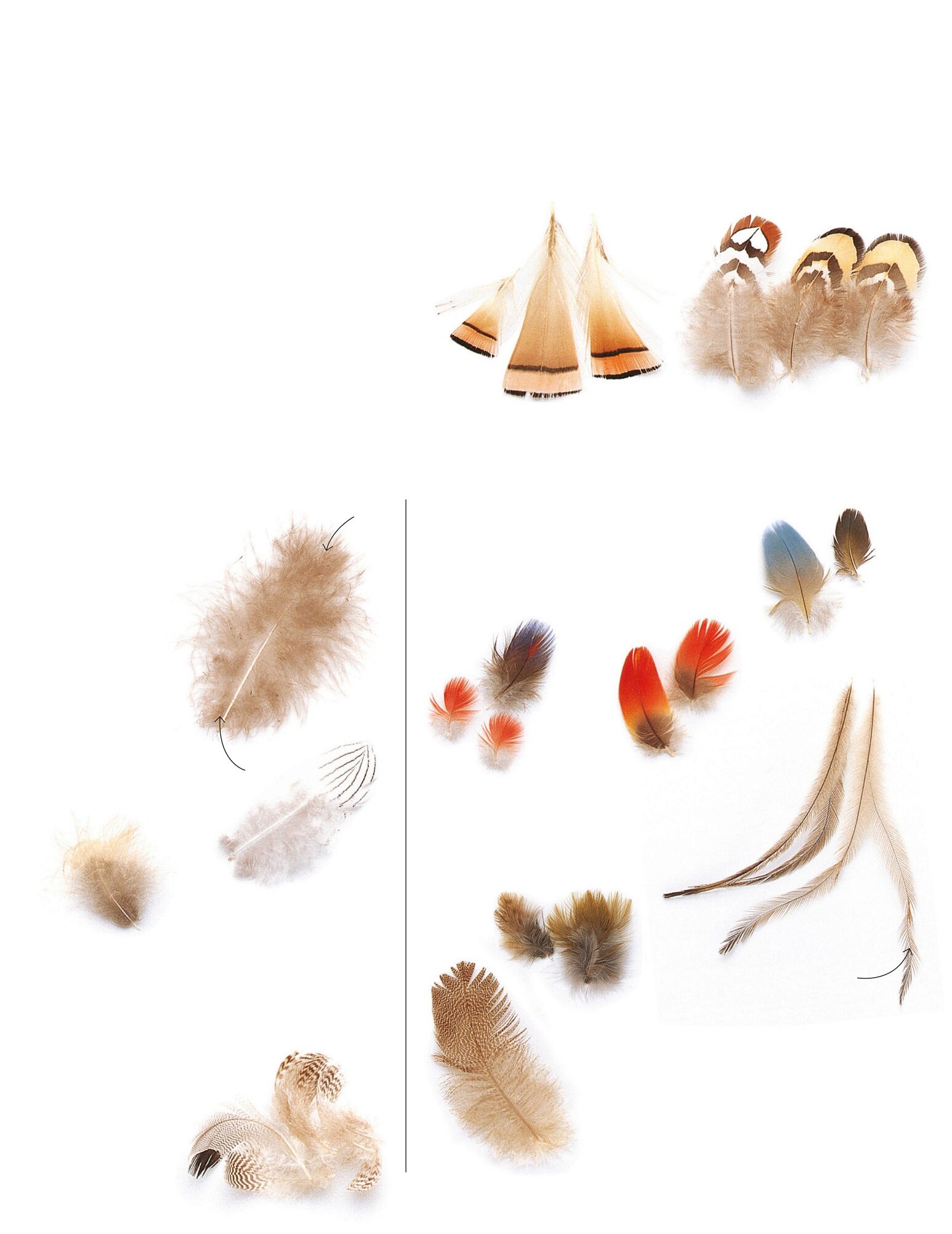
Feathers are designed not only for
flight. Some are used to insulate
the bird’s body; others are used for
camouflage, to incubate the eggs, or
to attract a mate. These tasks are
performed by down feathers, body
feathers, and the feathers in the tail.
Body feathers
Body feathers come in a variety
of colours, shapes, and sizes.
Some are used just to cover the
bird’s body, while others play a
key role in courtship and display.
Thermal cladding
Small down feathers
are packed around
the body to form a
fur-like mat.
Incubation
Many birds, like the
teal, use breast
feathers to keep
their eggs warm.
Dual
function
Many feathers
also have a mass of down
where they are attached
to the body. These help
in camouflage and also
keep the bird warm.
Red lory
feathers
African
grey parrot
feathers
Macaw
feathers
Tropical brilliance
Many tropical birds have brightly
coloured feathers that may help
them to identify and communicate
with their own kind.
Courtship plumes
These hanging feathers
adorn the neck of the
male wild turkey. Each
feather is divided into
a pair of plumes.
Shortened
barbs
Leafy camouflage
The dull green tips of the green
woodpecker’s feathers help to
camouflage it in grassy fields.
Flying heavyweight
This feather is
from a bustard –
one of the
heaviest
flying birds.
Down feathers
Down feathers are found
next to the bird’s skin.
Their barbs do not
lock together,
but spread
out to form
a soft mass.
Quill
Barb
Patterns on the surface
In many birds, only the
exposed tips of the feathers
show distinctive markings.
A pheasant’s cape
The neck feathers of the male
golden pheasant form a brilliant
black and gold cape.